Stop Chaining Black-Box APIs. Build Real-Time Neural Voice Agents.
Generative Voice AI, from tokens to fully agentic, full-duplex TTS — streaming, barge-in, turn-taking, and the production failure modes nobody documents.
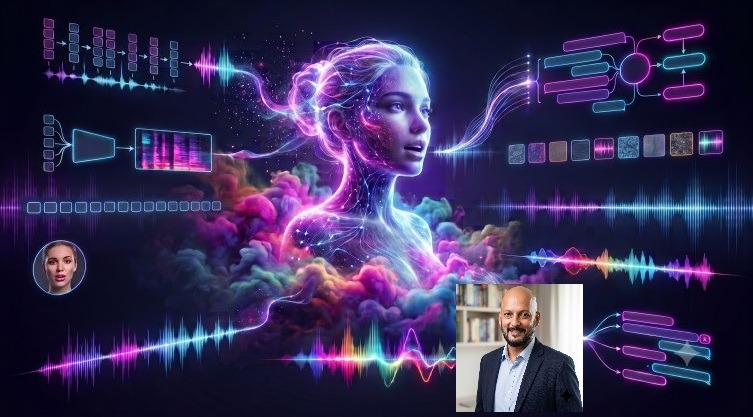
What You Will Actually Build & Deploy
Moving beyond black-box API wrappers to production-grade, low-latency audio infrastructure.
Sub-500ms Latency
Cut end-to-end voice agent latency from the industry-typical 2+ seconds down to sub-500ms, using sentence-level TTS streaming and time-to-first-token optimization.
True Barge-In & Reversion
Implement interruption handling correctly — including semantic reversion, ensuring your agent never "remembers" hallucinations or words the user never actually heard.
Full-Duplex Edge Architecture
Deploy a full-duplex, WebSocket-based architecture that survives real conditions: 6GB-VRAM consumer edge constraints, echo-cancellation failures, and false barge-in from background noise.
Is This Course Right For You?
Be sure this matches your current engineering background and career goals.
This is for you if:
- You've already got a basic TTS/ASR pipeline working and you're hitting the wall on latency, interruptions, or production reliability.
- You're building voice agents (support, telephony, interactive assistants) that need to feel real-time, not slow and turn-based.
- You want to understand SpeechLM architecture deeply enough to debug, fine-tune, and optimize it, not just call a black-box API.
This is NOT for you if:
- You're completely new to voice AI — start with Mastering Voice AI: From ASR to Emotion AI first, then come back.
- You want a no-code / drag-and-drop voice agent builder without writing Python or PyTorch code.
- You just want "the fastest way to ship a demo" — this course is specifically about what breaks after the demo in production.
Voice AI Latency Budget Calculator
Try the interactive latency budget calculator below — see exactly where your own pipeline is losing milliseconds before you enroll.
Direct On-Demand Masterclass Access
Get immediate, lifetime access to all 25+ hours of neural audio codec breakdowns, flow-matching TTS implementations, full-duplex WebRTC codebases, and verifiable certificate of completion on Udemy.
Enroll Directly on Udemy
Learn at your own pace with lifetime on-demand access to all 25+ hours of neural codec lessons, flow-matching codebases, and Q&A.
- Neural audio codecs: EnCodec, DAC, Mimi & RVQ tokenization
- Autoregressive SpeechLMs & Flow-Matching (F5-TTS, Matcha)
- Full-duplex WebRTC agent with sub-200ms latency & barge-in
- Lifetime access + downloadable PyTorch repos & certificate
The Complete 7-Module Curriculum
From the physics of sound to production-deployed full-duplex agents (33 Lectures & Labs).
- L1 – Physics of speech
- L2 – Source-filter model
- L3 – Phonetics & Phonology
- L4 – Prosody
- L5 – Acoustic features
- L6 – The Paradigm Shift: Traditional Cascade vs. SpeechLMs
- L7 – Self-Supervised Learning (SSL) for Audio Representation: wav2vec 2.0 & HuBERT
- L8 – Semantic Tokenization: Extracting Meaning via K-Means
- L9 – Neural Audio Codecs & Acoustic Tokenization: EnCodec, SoundStream, DAC, and RVQ
- L10 – Decoding & Vocoding: Translating Tokens Back to Audio
- L12 – Multi-stream token strategies: Flattening vs. interleaving RVQ codebooks
- L13 – Autoregressive decoding: Sampling, top-k, and classifier-free guidance for audio
- L14 – Speaker conditioning, emotion control, and prosody injection
- L16 – Expanding LLM vocabularies: Joint text–audio tokenization strategies
- L17 – Cross-modal alignment and joint speech–text pre-training objectives
- L18 – Modeling paralinguistics: Laughter, breathing, disfluency, and affect
- L19 – Dataset prep & Evaluation: Curating data (LibriTTS, Emilia) and metrics (MOS, WER, UTMOS)
- L21 – Bridging discrete LLM semantic tokens with continuous acoustic diffusion
- L22 – DDPM, score-based, and latent diffusion architectures for mel-spectrogram synthesis
- L23 – Lab: Vocoders – Hi-Fi GAN and decoding latent representations back to waveforms
- L24 – Lab: Memory-efficient diffusion inference on consumer GPUs (Gradient checkpointing & offloading)
- L25 – Continuous vs. discrete time steps, ODE solvers, and Rectified Flow
- L26 – Conditional flow matching for TTS: Text-to-mel trajectory learning
- L27 – Flow matching vs. diffusion: Quality, speed, and controllability trade-offs
- L29 – End-to-end multimodal architectures: Eliminating the cascade bottleneck
- L30 – Zero-shot voice cloning and dynamic emotion transfer in native agents
- L31 – Minimizing synthesis latency: Chunked inference and speculative decoding
- L32 – Deployment patterns: WebSocket streaming, interruption handling, and turn-taking
Voice AI FAQs
I've never built a voice pipeline before — is this for me?
Not yet. Start with Mastering Voice AI: From ASR to Emotion AI to Voice Cloning. This course assumes you can already get a basic TTS/ASR loop running and want to solve what happens next.
Do I need a powerful GPU to follow along?
No — Module 7.4 specifically covers deployment on constrained hardware (6GB VRAM), including exactly which trade-offs to make.
Which SpeechLM/TTS engines does the course actually cover?
The course teaches the underlying architecture from open building blocks — wav2vec 2.0, HuBERT, EnCodec, SoundStream, DAC — so you understand how any TTS or SpeechLM system works, including commercial ones, from first principles rather than treating them as black boxes.
How is this different from your other Voice AI course?
Mastering Voice AI covers the fundamentals — building a working pipeline. This course picks up from there: generative, agentic, full-duplex, and production-deployed.
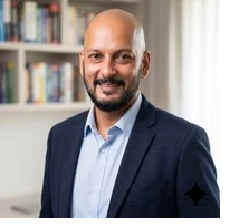
Vinit Singh
AI Consultant & Principal AI Architect, gadgap AI
Vinit is an AI Consultant and Educator specializing in LLM Fine-Tuning, Voice AI, Speech Language Models, Agentic AI, and Computer Vision — with over 18 years of experience in Data Science and Artificial Intelligence. A graduate of IIT Bombay with Stanford Machine Learning and Deep Learning certifications, he works at the intersection of AI research and real-world deployment.
Currently a Consultant in the Speech & Language team at Sony India Software Centre, his prior work spans Computer Vision on Nvidia edge hardware at Assert AI, and end-to-end AI consulting at tvam Technologies — where he built agentic FinTech workflows, a robo-advisor via LoRA fine-tuning on DeepSeek-R1, and a Voice AI telecaller pipeline.
A top 3% Udemy creator globally, trusted by learners across 150+ countries and enterprises including Adidas, Barclays, and Volkswagen — covering Voice AI, Agentic AI, Computer Vision, and NLP & LLMs.
Enroll in Generative Voice AI
Gain instant lifetime access to all on-demand video lessons, PyTorch codebases, and certificate on Udemy.